


CRM Whispering: Finding Your Business's Digital Sweet Spot Without Breaking the Bank

Ever felt like your client list is a tangled garden, not a thriving ecosystem? A place where vital connections are buried under weeds of forgotten details, and opportunities wither before they truly bloom? You're not alone. The feeling of being overwhelmed by the very relationships that fuel your business is a familiar burden for many family business owners. You see the promise of growth, the legacy you’re building, yet the day-to-day operations – the tracking, the follow-ups, the sheer volume of information – can feel like an unending tide pulling you further from your core work. It’s easy to feel stuck, isn't it? To know something needs to change, but the path forward seems obscured by a thousand options, each promising salvation at a premium price. You’ve built this business on trust, on relationships, and now you’re looking for a way to nurture those connections with the same care you’ve always given, but with a structure that supports, not strains. This isn't about buying the most expensive software; it’s about finding the digital heartbeat that resonates with your business’s unique rhythm, allowing it to thrum along with quiet efficiency. Why ‘Affordable’ Isn’t Just About Price: It’s About Fit and Flow When we talk about 'affordable' Customer Relationship Management (CRM) solutions, we’re not just talking about the monthly subscription fee. We’re talking about the total cost of ownership – the time it takes to learn, the energy it siphons from your team, the friction it adds if it's not the right fit. A CRM, at its best, should become an invisible partner, supporting your natural way of connecting with clients without forcing you into a rigid, unnatural dance. Think of your business as a living system. Just as a garden thrives when it has the right soil, light, and water for its specific plants, your business relationships flourish with the right environment. A 'cheap' solution that doesn't integrate with your existing processes, or one that's overly complex for your needs, will ultimately cost you more in frustration, lost time, and missed opportunities. Pressure is a design issue, not a performance issue. If your current systems are causing pressure, it's often because they weren't designed with your unique operational flow in mind. The goal isn't to buy a system that does everything; it's to find one that does exactly what you need it to do, elegantly and without fuss. For many family businesses, this means a CRM that simplifies contact management, tracks interactions, streamlines follow-ups, and perhaps offers basic reporting. It’s about reducing operational friction so you can focus on building those treasured client relationships and guiding your business towards its strategic future. Strong foundations make growth possible, and an intelligently chosen, affordable CRM can be one of those foundational pillars. Assessing Your Business’s True CRM Needs (And What You Don't Need) Before you even look at systems, take a deep breath and look inward. What are the day-to-day interactions you have with your clients? How do you currently remember details, follow up, and track their journey with you? Often, the solution isn't about adding more complexity, but about simplifying what's already there. Here's a practical guide to help you uncover your true needs: 1. Map Your Client Journey: From first contact to ongoing support, what are the key touchpoints? Where do communications tend to get lost? Where do you wish you had a clearer picture of your client's history with you? 2. Identify Your Core Problems: Are you forgetting to follow up? Are client details scattered across spreadsheets and sticky notes? Is it hard to see your sales pipeline at a glance? Be specific about the pains you feel. 3. Prioritize Simplicity: For many small businesses, a CRM’s strength lies in its intuitiveness. If it requires a week of training for your small team, it’s probably too much. You want something that integrates seamlessly into your existing habits. 4. Consider Your Team: How many people will be using this system? What are their comfort levels with new technology? A successful CRM is one that everyone actually uses. 5. Define Your 'Must-Haves' vs. 'Nice-to-Haves': Do you absolutely need email integration? What about task management? Only pay for the features that directly address your core problems and genuinely enhance your workflow. Avoid getting dazzled by advanced features you'll never use. Remember, the right CRM allows growth to follow alignment. It aligns with your processes, your team's capabilities, and your financial constraints, creating a harmonious environment where your client relationships can truly flourish. Finding Your Flow: Real-World Solutions for Budget-Friendly Success An example. Eleanor, who runs a local catering business. Her client list grew organically, but managing custom orders, catering inquiries, and loyalty program members became a tangled mess in an overflowing email inbox. She didn't need complex sales forecasting, just a simple way to track customer preferences, order histories, and send personalized updates. She adopted a lightweight CRM and primarily focused on contact management and basic task reminders. The result? Fewer missed orders, more personalized communication, and the ability to reclaim precious hours previously spent digging through emails. Her customers felt more valued, and Eleanor felt a calm sense of control return to her days. Then there's Mark, a specialized contractor who built his business on word-of-mouth. His challenge was keeping track of project statuses, client communication, and follow-up for maintenance services. His "CRM" was a series of notebooks and calendar entries. He adopted a CRM known for its robust yet user-friendly pipeline management and automated follow-up sequences. It allowed him to visualize every project stage, ensure no client was forgotten, and even send automated reminders for annual checks – transforming reactive repairs into proactive service, all within a budget that made sense for his team of five. These stories aren't about magic software; they’re about intentional choices. They demonstrate that the most powerful CRM isn't always the one with the biggest price tag or the most features. It's the one that listens to the quiet hum of your business, understands its unique needs, and provides just enough structure to support its growth without introducing unnecessary noise or complexity. You have the power to bring order to your client relationships, to cultivate a digital structure that nurtures your legacy, not undermines it. By thoughtfully assessing your needs and choosing a solution that aligns with your business's true heartbeat, you can restore flow, reduce administrative strain, and create the space you need to focus on what truly matters – building enduring relationships and stewarding your family business for generations to come. Your operational house can be in order. Take the next step towards that quiet, confident efficiency.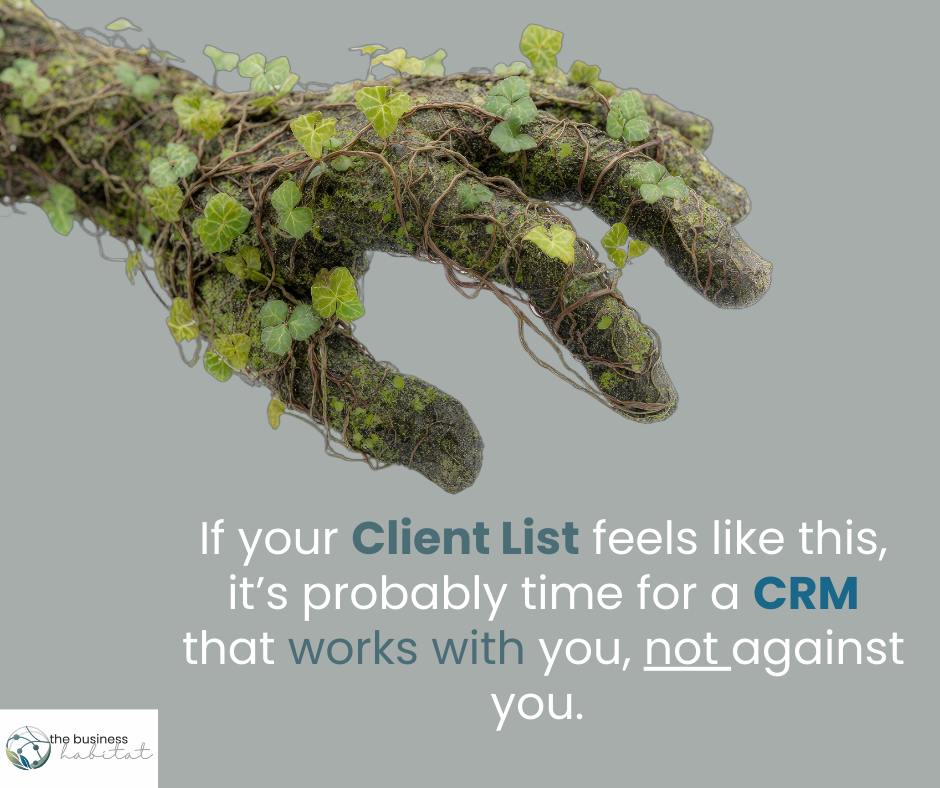


Comments